As you might be aware, I host the Digital First Media Twitter chat, #DFMchat, at noon on Wednesdays, in which journalists and anyone who wants can discuss issues as they relate to our current digital environment.
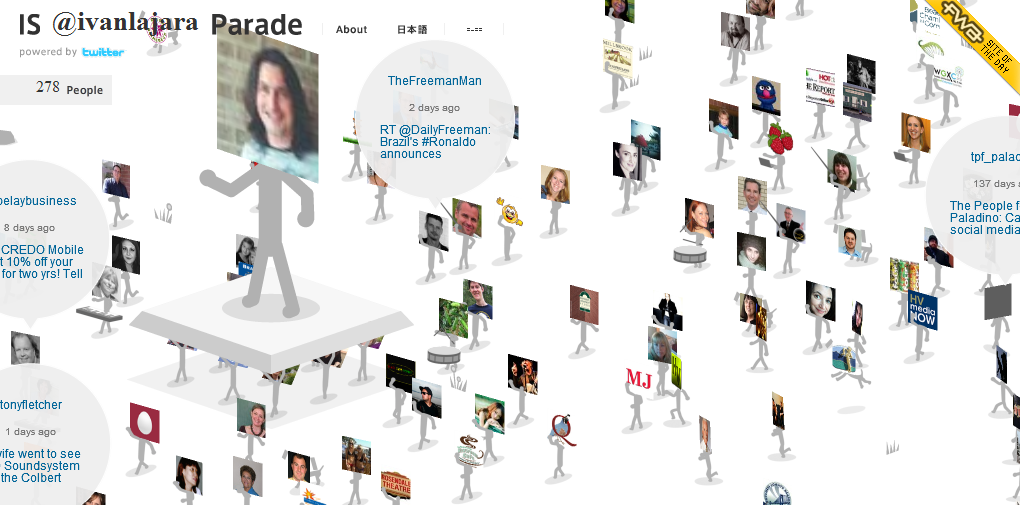
Unfortunately, for the past weeks, a troll impersonating me, @Lvanlajara, which uses a lowercase "l" so it looks like me, with my avatar, has been bombing the hashtag, dropping irrelevant tweets and a whole bunch of curses.
The first thing to if you are encountered with a troll is to block and report, which is easily done on Twitter.
Hashtag blocking can be easily accomplish like this:
On Tweetdeck, if you are following #DFMchat, mouse over the suspect account and click on the name. The troll's identity can easily be determined by bio (if it's similar is a violation of Twitter's terms of service, and the account can be suspended, but in my case it's not). After determining the troll account, mouse over the avatar, pick the bottom right icon, and hit block and report.
If you are using New Tweetdeck (I don't like personally, so I still use an old version before Twitter bought the service), click on the avatar image and hit block.
This makes the troll disappear from the feed.
On Tweetchat simply mouse over the user icon to the right of the offending tweet and hit block.
I keep the curated, troll-less feed in CoverItLive, so I'm not just auto-feeding the hashtag. CoverItLive doesn't have a function to ban a Twitter user from an automated feed, since it is not its primary purpose, so I just do a search of the tag and add the tweets in real time, sans troll. Here's is today's archive.
I didn't expect to have an online impersonator, but this deranged individual (a local person with too much time, as it is obvious from the tweets) can be used in an unintended lesson on what can happen when you open up as we have.
An alternative would be to host the chat exclusively on CoverItLive, but I want to reach as many people as possible, so I'm willing to put up with the pest in order to reach a wider audience.
I had the pleasure of hosting Rosemary Armao's journalism class at SUNY Albany this morning. You might recognized Armao's voice as one of the hosts of WAMC's "The Media Project", which also hosts Freeman Publisher Ira Fusfeld. I spoke about some of the Freeman's digital initiatives, some tools, and how they help improve journalism. Some of those initiatives are showcased below:
I was asked to give tips on blogging and Twitter, and I was probably incomprehensible as I tried to cram too much information into a lecture. I think I said something about cats. Repeatedly.
Still, I want to offer the prospective journalists a quick cheat-sheet on how to blog and how to use Twitter. There are others that are way better than me at this. But you're stuck with me, so here it goes.
Quick tips for blogging: * What to blog. Do you have a passion? Then you have a blog.Write about what you talk about and about what interests you, your beat, etc. Have fun. * Don't make the post too long. Yes, sometimes you want to write long pieces, but generally speaking, a short post will do better (this is where your training as a concise writer comes in handy). * Have a voice. If you are just starting, this is the best way to develop your voice. Be personal (though you don't have to if you don't want to). Be yourself. So, yes, add an image and at least a bio.
* Watch out for typos. This might be the copy editor in me, but typos, even in blogs, are not coolsies, unless you're doing it on purposies. * Add an image. Humans are visual people (Pinterest, anyone?) and people respond better to posts with images than those without. It's not my fault, so don't blame me. It's just more attractive to read. If you don't have an image that fits your particular post, include a stock art image (I actually said "post pictures of cats!" during the lecture, but the point holds, as the image above wonderfully illustrates with cuteness).
Quick tips for Twitter use. * GET ON TWITTER. Now. I'll wait. (here's an explainer I wrote a while back) * Are you in. Great! Update an image of yourself (or a cat). Add a bio (link to your blog!), contact info, etc. Don't make your account private. That beats the purpose of the whole thing. * So what now? I'd give you a Top-10 list if uber media man Craig Kanalley hadn't written a most excellent one already,, for making the most of Twitter. And yes, as Sree Sreenivasan wrote, "make your tweets blue."
There's obviously, a lot more to this. But this should be enough to get you started.
The focus was "The State of Now." Our friends at Dragon Search Marketing livestreamed the event and I have shamelessly taken it from their Facebook page.
Full disclosure: I'm a speaker and I embarrassed myself at 3 p.m.
So I tasked myself with improving our newsroom Twitter and Facebook presence (and your experience with us) back in late March and early April.
Sure, The Daily Freeman and its reporters are on Twitter and on Facebook. But pushing links (or asking questions for the sake of asking questions) is not really the way to go.
Here's what we did.
First, we needed some tools. I personally find the social media manager Tweetdeck immensely useful (here's why), so I decided to equip reporters with the program, and then add the link shortener bit.ly's API key so that we can keep track of what links works and what doesn't.
"Wait a second!" You are saying right now. "What's API? (And what's up with the stick man?)"
The application programming interface is basically a language that allows programs to talk to one another. All you do is grab your bit.ly account's "key" (also known as "a whole bunch of nonsensical characters") and add it to Tweetdeck's settings (needless to say, you need a bit.ly account and Tweetdeck).
All of this is basically to figure out what messages generate responses and clicks.
Second: Training. As mentioned in this space before, I set up training session for Twitter best practices and Facebook. Here's the whole enchilada, in two parts.
As a favor to you (because you probably don't have two hours to spare to watch me, me me), I've summarized it all neatly here:
Actually, for a real summary, you're probably better off reading this.
Third, execution time.
This is where the staff really shined. Unprompted, reporters are now routinely thinking in a way that incorporates these tools into their workflow. I don't have to tell you about Patti Doxsey's live-tweeting of a murder trial with an iPad, for instance. (If I do, check this out).
Here's why we're doing this, by the way, it's not just because we can:
I also like to think that our engagement on Facebook has finally created more conversations with you. We're getting close to 2,200 likes, and there has been more connections and interactions in the past for weeks than since I remember.
Yes, there's much room for improvement, but the seeds have been planted. And they're sunflower seeds. We're tweeting more, sure, but we're tweeting valuable stuff — and not to the empty Twitter forest, which looks like this:
And this brings us to the fourth step. Evaluation, troubleshooting and repetition of successful experiments. Using Patti's latest live-tweeting as an example. Here are some quick stats from last week's live-tweeting: The average reader of Dailyfreeman.com stayed with Patti's tweets for more than an hour. Her sessions along gathered more than 100 comments from you, some opinions, but many of them questions, which I tried to answer when I was moderating the comments.
(By the way, I used the live-blogging platform CoverItLive, so that those without a Twitter account could still follow her tweets. Here's how to use that).
Many people, incidentally, created Twitter accounts just to follow her.
Moving on. On Tuesday, we're doing a livestream of the Kingston school board candidate's forum. And we'll have a CoveritLive container for you to participate while it goes on. The livestream idea came from reporter Kyle Wind, a continuation of the many livestreams and digital-first initiatives we've had in the last year.
All this has been a bit bumpy, yes. But we're getting better and better, so hopefully you won't have to see things like this:
As it is now becoming tradition, members of the Journal Register Company Idealab (yours included) and anyone interested are going to be holding our weekly Twitter/CoverItLive chat at noon.
Today will be talking about the AOL/HuffingtonPost deal, since it potentially can or may affect and/or influence smaller news organizations. We'll also be brainstorming some ideas for super reporting - meaning how to accomplish covering an event in a variety of platforms if there's only one of you.
The blog Journalistics had similarly posted a ranking of top newspapers' Facebook pages, and our own page would have ranked 25 among those surveyed, even though we're way smaller when it comes to circulation.
That got me thinking.
We're a small shop, and (spoiler alert!) our Facebook posts had generally consisted of tweets that were automatically posted on Facebook. Even though, as JRC Idealaber and awesome dog person Karen Workman pointed out during a social media training session, you don't want to just post just links, and that's pretty much what we've been doing.
So here's a problem. Our social media presence, thought somewhat strong, is not what it should be. I've tasked myself to at least triple our followers on Twitter, currently standing at 600, and to double our Facebook fans.
But how?
In my last post, I mentioned that a couple of our Storify posts were not from our tweets but from our users (that's you). When Billy Joel came to town, we did a story, sure, but I also went around social media to create a storyline using your very posts to create a timeline of his trajectory. When the Ulster County Jail was featured on "Ghost Hunters" and I found myself with no time to watch it or tweet it, I was able to curate a story using your posts.
Both of those stories amassed great interest. And Facebook, in October, was the second largest referrer to our site, surpassing AOL, Yahoo, and Bing, and second only after Google.
So using Karen's tips and fitting them to our newsroom capabilities, we're going to engage you in a more, er, engaging way.
My plan will also include highlighting our featured bloggers, so that they get some traffic and we get some too. We've already experimented with this with our staff blogs, and the traffic results are incredible.
As a side note, I should point out that unique visitors increased dramatically on my blog, just by posting my latest rambling as a latest update on the Freeman's site. So my plan is to increase our own traffic and that of our featured bloggers by highlighting their posts when they have something fresh.
Since I'm technically on vacation, I left the iPad and the Netbook in the newsroom, so our reporters can experiment with them and use them as they see fit.
I'll let you know how we're doing. And, as always, feel free to tell me I'm a crazy person that should be institutionalized.